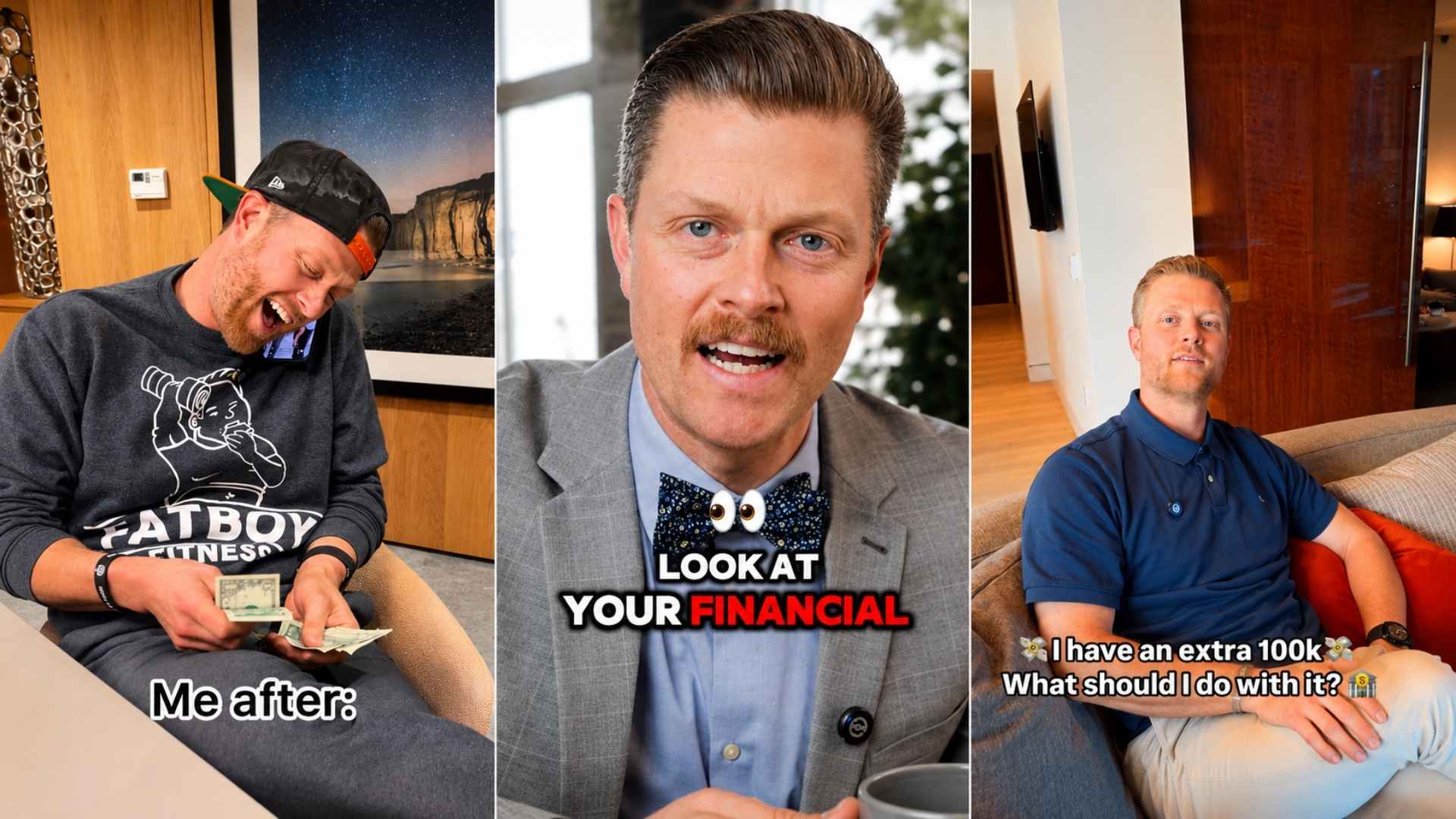
Virtual Assist had a growing service offering and a clear target market, but their ads weren't converting at the rate the business needed. Low engagement, messaging that didn't stop the scroll, and a lack of professional creative direction were costing them visibility and customer acquisition in a competitive market. This was the second COURSE engagement on Virtual Assist's ad creative — a campaign built to push the performance ceiling further with on-site production, viral storytelling mechanics, and a more aggressive hook testing framework.
The production approach was built around authenticity and speed. On-site video production gave the ads the real, location-grounded quality that built credibility with Virtual Assist's blue-collar and small business audience — footage that looked and felt like the actual service rather than a polished abstraction of it. Social-first storytelling integrated trends and rapid scene cuts to create the energy that held attention on platforms where a viewer's decision to keep watching happened in the first two seconds. The visual environment moved quickly and purposefully, with every cut earning its place in the sequence rather than filling time.
Hook development was the strategic centerpiece of the campaign. Multiple compelling openers were written and produced for each video — different angles, different opening statements, different emotional entry points into the same core message — giving the A/B testing framework meaningful variables to optimize against rather than surface-level creative differences. Conversion-optimized editing used fast cuts, motion graphics, and high-energy visual pacing to drive engagement and maintain watch time through to the call-to-action. The editing was calibrated for the specific viewing behavior of Virtual Assist's audience on each platform rather than applying a single approach across all placements.
A/B testing ran throughout the campaign — tracking which hooks, angles, and visual approaches generated the highest retention, click-through, and conversion rates, with findings feeding directly back into iteration and scaling decisions.
The results improved on the previous engagement: click-through rates increased by 48%, conversion rates rose by 35%, video watch time extended meaningfully as the stronger hooks held audiences longer, and cost per acquisition dropped as higher-performing creative made every advertising dollar stretch further.