The online course market is booming—and we’re talking billions. With projections showing global e-learning revenue hitting over $325 billion by 2025, there's clearly a huge demand. But while launching your course is step one, proving its ROI (Return on Investment) is where the magic happens.
Whether you're selling to learners directly or pitching your training to a company’s L&D team, you need to demonstrate the value of your course—in dollars, impact, and growth. So, let’s break it down and show you exactly how to measure and prove the ROI of your online training program.
What Does ROI Really Mean for Online Courses?
Return on Investment, or ROI, basically answers this question:
“Are we getting more value out of this course than what we put in?”
For online courses, this isn’t just about revenue. ROI can include:
- Increased employee performance
- Reduced training costs
- Higher customer satisfaction
- Certification rates
- Revenue from course sales
- User retention and lifetime value
So, proving ROI isn’t a “one-size-fits-all” formula. It’s about aligning your course outcomes with your business goals—and having data to back it up.
Why Proving ROI is More Important Than Ever
Here’s the deal:
- Budgets are tight: Whether you're working with HR teams or selling to individual learners, everyone wants to know their money is well spent.
- Competition is fierce: With thousands of courses out there, showing measurable impact sets you apart.
- Scalability depends on results: You can’t scale fluff. You can only scale what works—and you need numbers to prove what’s working.
Gainsight’s insights say it well: “ROI is the north star metric that gets execs, customers, and stakeholders fully invested in your training program.” So let’s help you find your north star.
Step-by-Step Guide: How to Prove the ROI of Your Online Training Program
1. Start with Clear Learning Objectives
Don’t skip this. If your course doesn’t have clear, measurable learning outcomes, it’ll be nearly impossible to prove its effectiveness.
Ask yourself:
- What skills or knowledge will learners gain?
- How will this impact their job, behavior, or productivity?
- What’s the intended business result?
Example: A leadership course might aim to improve team performance scores or employee retention over six months.
2. Track Learner Engagement and Completion Rates
Think of these as your baseline metrics. A course that’s not being completed won’t generate ROI.
Track:
- Registration numbers
- Module completion rates
- Quiz/test scores
- Average time spent on platform
Use tools like:
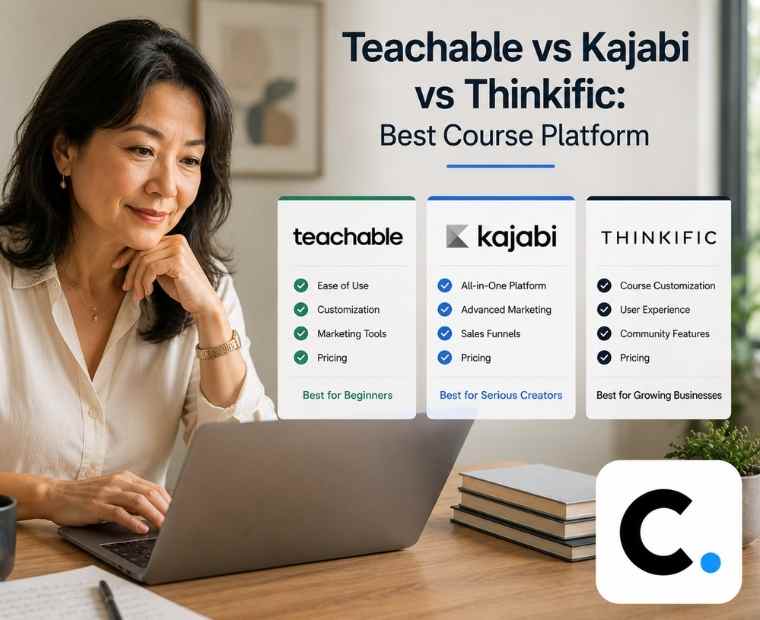
- LMS dashboards (Think: Teachable, Thinkific, Kajabi)
- Google Analytics
- Surveys pre- and post-course
3. Quantify Business or Personal Impact
Here’s where things get juicy. You want to measure what changed because of your course. That might include:
- For individuals:
- Job promotion or career switch
- Increased income or client acquisition
- Improved confidence or productivity
- For businesses:
- Shorter onboarding times
- Lower turnover rates
- Higher sales or productivity
- Reduction in errors or support tickets
Example: Gainsight shares that by aligning training with customer success outcomes, one company saw a 25% boost in product adoption—a direct indicator of ROI.
4. Calculate the Actual ROI Formula
Let’s get math-y (but keep it simple):
ROI = [(Benefits – Costs) / Costs] x 100
Say your course generated $50,000 in revenue and cost $15,000 to develop and market.
→ ROI = [($50,000 - $15,000) / $15,000] x 100 = 233% ROI
If it’s an internal training program, replace revenue with things like:
- Savings in travel/venue costs
- Time saved per employee
- Increased sales or fewer support issues
5. Use Testimonials and Case Studies
Not everything needs to be a graph. Human stories sell better than spreadsheets.
Collect:
- Before-and-after stories
- Screenshots of results
- Video testimonials
- LinkedIn endorsements
Pro Tip: Make it part of your course experience to ask for feedback at the end.
6. Benchmark Against Industry Standards
Help your audience understand what success looks like. Compare your course’s performance to:
- Industry pass rates
- Certification success rates
- Job placement stats
If your course is outperforming others in your niche, that's instant credibility.
7. Report, Iterate, and Optimize
Measuring ROI isn’t a “set it and forget it” deal. It’s ongoing. Make it a habit to:
- Run quarterly reviews
- Identify weak modules or underperforming lessons
- Update content based on learner feedback
This not only proves ROI—it increases it over time.
Real-World Stats That Back You Up
Just to give your pitch more weight, check these out:
- E-learning increases retention rates by 25% to 60% (compared to 8–10% in traditional training).
- Companies using online training report 42% more revenue per employee (IBM study).
- For every $1 spent on e-learning, companies make back $30 in productivity gains (SHIFT eLearning).
Now imagine putting those stats next to your course success metrics—boom, ROI story told.
FAQs: Quickfire ROI Q&A
Q: How long does it take to see ROI from a course?
A: Depends on your business model. For B2B, you might see results in 3–6 months. For B2C, even faster if your course hits the right audience.
Q: Can free courses have ROI?
A: Totally! Think about lead generation, email list growth, or upsell potential. Value doesn’t always mean direct dollars.
Q: What if I’m just starting out and don’t have data?
A: Start tracking now. Use surveys, feedback, and beta-test results to build a case early.
Final Thoughts: From “Nice-to-Have” to “Must-Have”
ROI isn’t just about proving your course works—it’s about making your program irresistible. Whether you're pitching to investors, corporate clients, or solo learners, knowing how to measure and communicate your impact is key to growth.
Want to take it a step further? Build a dashboard, include a case study on your sales page, or offer a money-back guarantee based on real results. It’s bold—but it works.